Prayer Requests for Lebanon as War Expands
Prayer Requests for Lebanon as War Expands
Despite a regional ceasefire agreement between Israel, the US, and Iran, war continues to rage in Lebanon.
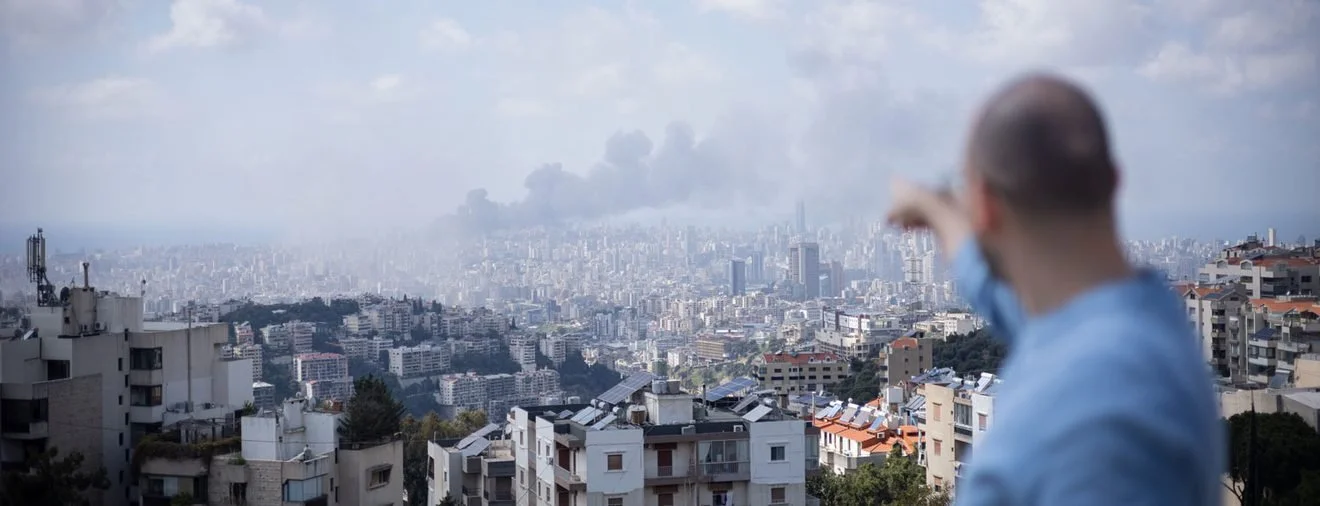
At around 2:15 pm today, Israel carried out 100 airstrikes across the country, targeting what it said were Hezbollah headquarters, command centers, and military sites. It was the largest attack carried out by Israel since the start of its war with Hezbollah last month.
As of this time of writing, preliminary reports cited by Lebanon’s health ministry state that dozens of people have been killed and hundreds more wounded. Local media have reported even larger figures. The number of casualties is expected to rise in the coming hours.
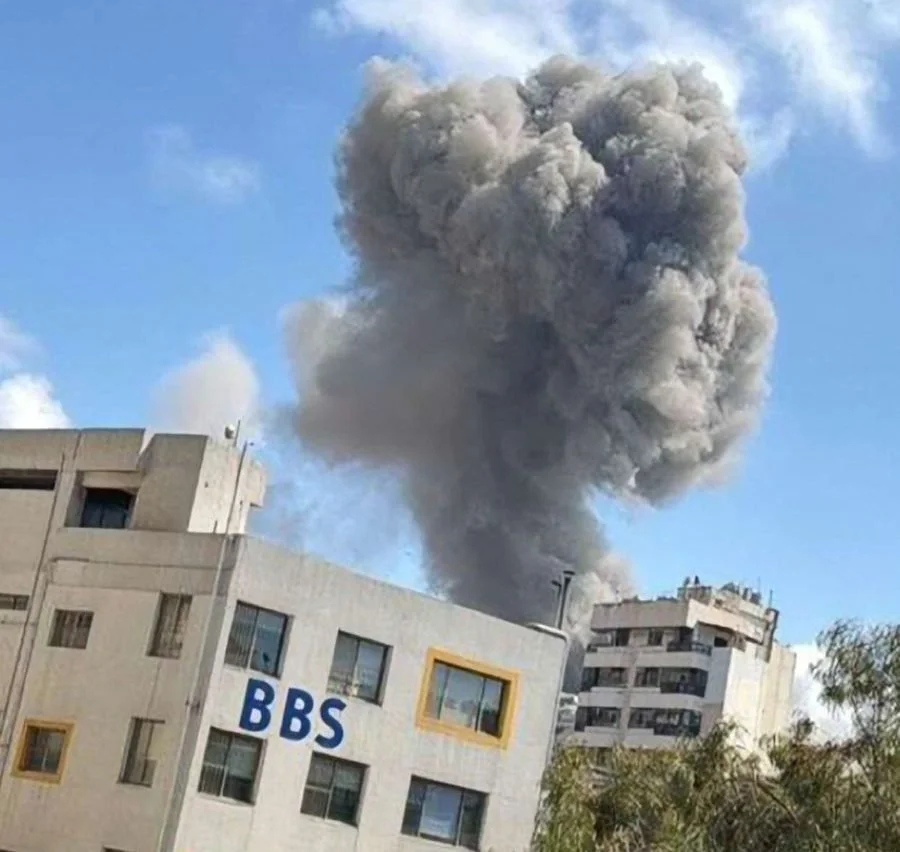
Multiple strikes hit near Thimar’s Beirut Baptist School (BBS) in the capital city. BBS leadership had just left the school minutes before the attack. As they drove through the city’s crowded streets, one of the airstrikes hit a residential building 10 meters away from their vehicles. None of the BBS leadership were hurt, but the attack left them shaken.
“We are all safe, thank God, but some of us are still stuck in Beirut,” BBS Principal Alice Azar told our team by phone.
With debris strewn across streets jammed with vehicle traffic and ambulances, she and her team were trying to figure out how to get out of the area and drive somewhere relatively safe.
Other BBS staff still at the school and in other parts of the city described dire scenes as dark gray smoke continued to billow into the sky.
“It’s hell here,” said one BBS teacher living near targeted areas.
Videos and images shared online showed devastating destruction in multiple parts of Beirut, with buildings caved in from the blast of missiles and people frantically running.
The attack came after hours of ambiguity about whether the ceasefire agreement pertaining to Israel, the US, and Iran also applied to Lebanon.
In the early hours of Wednesday, April 8, US President Donald Trump announced a two-week ceasefire agreement with Iran that hinged on it opening the Strait of Hormuz. Shehbaz Sharif, the prime minister of Pakistan, which played a crucial role in brokering the agreement, said in a statement announcing the ceasefire that the cessation of hostilities also covered Lebanon, which has in many ways been a second front in the wider regional conflict. However, just a few hours later, the office of Israeli Prime Minister Benjamin Netanyahu declared that the ceasefire agreement did not apply to Lebanon. The Israeli military later followed with a similar statement, saying it would continue its fight against Hezbollah.
Throughout the early hours of Wednesday, Israel continued its attacks.
In the pre-dawn hours, Israel bombed a cafe in Saida, a historical seaside city south of the capital Beirut, killing around 8 people and wounding 22 others, according to Lebanon’s health ministry.
Such attacks build on an increasingly aggressive military campaign carried out by Israel. Unlike its previous war with Hezbollah from 2023 - 2024, Israel has targeted areas in this conflict that were once seen as relatively safe and outside the parameters of its fight with Hezbollah.
One of the most deadly incidents prior to today occurred on Sunday night. In the late hours of Easter, an Israeli naval strike hit a residential building in Ain Saadeh, a largely Christian town on the outskirts of Beirut. Israeli media and Samir Geagea, leader of the Lebanese Forces (LF), a staunchly anti-Hezbollah Christian political party, stated that the intended target was a member of Iran’s Quds Forces, an elite special forces unit closely aligned with Hezbollah. However, the attack instead killed Pierre Mouawad, an LF official, along with his wife, Flavia, and a neighbor who was visiting them.
While initial reporting suggested that the intended target of the attack lived on the top floor of the residential building, an investigation by the Lebanese military found that the missile that killed the Mouawads and their neighbor specifically detonated on the third floor where they lived.
The investigation also cast doubt on reports and videos suggesting that the intended target had escaped, stating that no new tenants were living in the building.
While many Lebanese are skeptical of the investigation and its findings, pointing to videos and testimonies that seem to suggest someone lived on the upper floor, the attack highlighted the growing dangers of the war. At the same time, it also inflamed rising social tensions.
Since the start of the war, many Lebanese, including Prime Minister Nawaf Salam, have accused Hezbollah of dragging the country into another conflict with Israel, an audacious move made even more infuriating by the fact that many people still had not recovered from the last war. With more than 1 million people displaced in Lebanon, many Lebanese have feared that Israel would strike areas unaffiliated with Hezbollah where members of the group may be hiding. The attack on Ain Saadeh, while not the first, was widely perceived as the bloodiest and most tragic realization of those fears.
On Tuesday afternoon, a funeral was held at Saint Simon church in Yahshoush, the home village of Pierre, where he headed the local LF office. Hundreds of people, including family members, friends, and LF officials and supporters, gathered in the church’s yard to bid farewell to Pierre and Flavia. People who knew Pierre described him as a man who loved Lebanon and his community.
Anger at Hezbollah was on full display during the funeral. The senior priest delivered the tribute, mourning Mouawads’ death as a casualty of a conflict that Lebanon was dragged into, lamenting the country’s chronic exposure to wars over the past decades.
“We are weary of Golgotha, we are weary of wars and destruction, as if Lebanon’s right to live in peace and dignity was taken from us 50 years ago. Enough of the persistence in evil, abuse and brutality without control or laws,” he said.
Following the funeral service, the crowd moved outside, where a LF member of parliament delivered a speech.
“Hezbollah, the agent, is applying Iran’s agenda at the expense of Lebanon and its people and dragging the country into a destructive and futile war,” he said.
His speech highlighted the growing political polarization in the country, reflecting a broader debate over state authority, armed groups operating beyond government control, and the future of Lebanon’s sovereignty.
It is unclear what the coming hours and days hold for Lebanon.
Late this afternoon, the Israeli military issued a statement alleging that Hezbollah forces are moving out of their traditional strongholds to areas across Beirut and Lebanon. The message seemed to suggest that even more areas once seen as outside the parameters of the war could soon find themselves under fire.
We feel that our country is taken hostage between two warring factions. At this dire moment, we continue to ask for prayers from our friends and partners around the world. Let us pray for genuine peace and for innocent civilians who are paying a high price. Pray also for our staff, ministries, and local church partners as we stand by those affected.